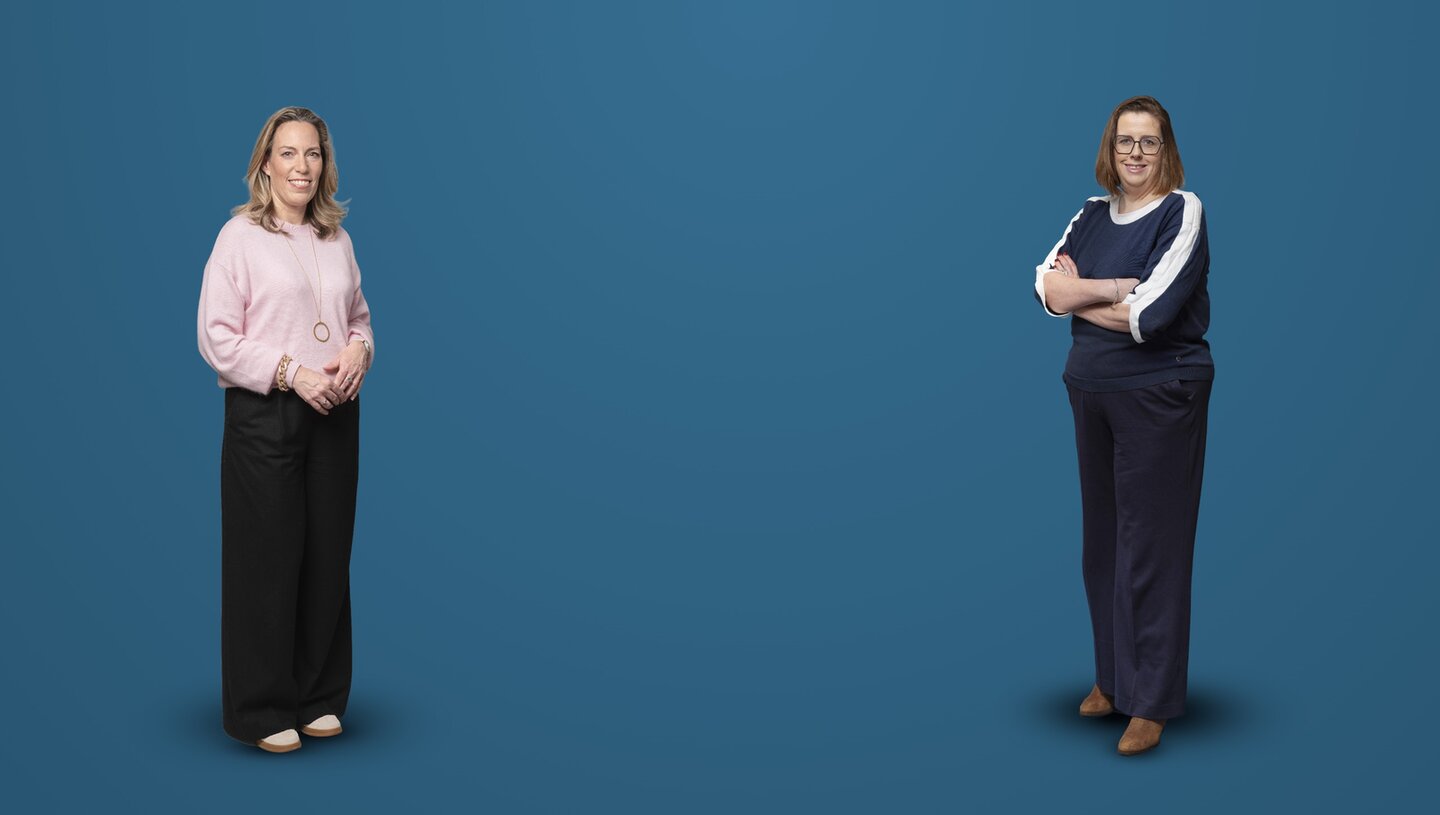
Kim Herbots
(47), editor-in-chief VTM Nieuws
Ilse Openneer
(51), editor-in-chief RTL Nieuws


News has a future beyond television
RTL Nieuws and VTM NIEUWS reach millions of television viewers every evening. But they also need to reach more people with news via streaming. Editors-in-chief Ilse Openneer (RTL Nieuws) and Kim Herbots (VTM NIEUWS) are charting a new course.

Ilse Openneer
(51), Editor-in-chief RTL Nieuws

“With RTL Nieuws, we want to be where the audience is, across all those platforms”
Ilse Openneer: “Television news still attracts strong viewing figures, but we also see that linear TV viewing is declining year on year. Audiences are moving across different platforms to meet their news needs. We want to be where the audience is, across all those platforms. That is why we have launched a major transformation, with digitalisation as a key part of it. The newsroom has started working in a different way, and we have completely renewed our editorial system and our studios.
“That transformation became urgent when the system we were using was on the verge of collapse. That was the moment to shift up a gear. We started with a blank sheet and mapped out what we needed to look like in order to be ready for the future. We introduced a new editing system, Adobe Premiere, and a different editorial system, Saga/Mimir. These systems do not run on servers, but in the cloud. That means you can access them from anywhere, including from home or on location. Everyone started working on laptops.
“After that, we rebuilt the studios and connected them to the new technology. First the RTL Z studio and, more recently, our large Studio 9. It was twelve years old and consisted of screens that gave us very little scope for mobility. The studio needed to become more flexible so that we could record there for different platforms. We can now move different LED screens around, and there are portrait screens too – a format that is also very useful for mobile viewing. To complete the transformation, we also overhauled the visual identity. The logo, the title sequence – everything is new.
“So it has been a real big bang for the newsroom, the technology, and the visual design. It was very demanding and far-reaching, but this was our opportunity to get it right in one go. The newsroom has also started working differently. In the past, everything led up to the evening bulletin. Now, online always comes first. The story is central. We now publish our own investigative stories in the morning; we no longer hold back the news. As a result, we reach far more people with a story.
“That includes younger people, who are much less likely to watch live television. We have social media accounts with a strong following. We have been making TikTok videos for a number of years and are growing rapidly there too. We are currently exploring how we can bring news to Videoland, where there is a huge young audience. For most people, a streaming service is a place to relax. It will be a challenge to get them to go there for news as well. So our work is far from finished. News on television certainly still has a future, alongside all those other platforms. It still allows us to reach a mass audience.”
Ilse Openneer
(51), Editor-in-Chief rtl news
“With RTL News we want to be where the audience is, on all those platforms”
Ilse Openneer: “The news on television is still watched very well, but we also see that linear TV viewing decreases year after year. The audience moves to different platforms to meet their news needs. We want to be where the audience is, on all those platforms. That is why we have initiated a major transformation of which digitization is a part. The editorial team has started working differently and we have completely renewed our editorial system and our studios.
That transformation became urgent when the system we were working with threatened to collapse. That was the moment to switch gears. We took a blank sheet and sketched out how we need to look to be ready for the future. We got a new editing system, Adobe Premiere, and another editorial system, Saga/Mimir. Those systems do not run on servers but in the cloud. This way you can access them from anywhere, also at home or on location. Everyone started working on laptops.
After that, we renovated the studios and connected them to the new technology. First the RTL Z studio and recently our large Studio 9. It was twelve years old and consisted of screens with which we could do little for mobile. The studio had to become more flexible so that we could record for different platforms. Now we can move various LED screens back and forth and there are portrait screens, a format also very useful for watching on mobile. To complete it, we also tackled the design. The logo, the leader, everything is new.
So it has been a big bang for the editorial team, the technology, and the design. Very heavy and drastic, but this was the chance to get it right all at once. The editorial team also started working differently. In the past, we worked towards the half-past-seven broadcast; now online is always the start. The story is central. We now bring our own investigative stories already in the morning, we no longer hold back news. As a result, we reach many more people with a story.
Also young people, who watch live TV much less. We have well-followed accounts on social media. For a few years now, we have been making TikTok videos and we are growing fast there as well. We are now figuring out how to bring news on Videoland, where there is a huge young audience. A streaming service is for most a place of relaxation. It will be a challenge to get them there for news as well. Our work is therefore far from finished. News on TV certainly has a future, alongside all those other platforms. We still reach a mass audience with it.”

Kim Herbots
(47), Editor-in-Chief vtm Nieuws
“Our seven o’clock news also appears on the VTM GO streaming service”
Kim Herbots: “Our newsroom has also started working in a different way. Until last year, the emphasis was on our lunchtime news at one o’clock and our evening news at seven o’clock. The seven o’clock bulletin is still a key pillar, but digital has become the other key pillar. In the morning and late morning, we publish digitally via HLN, and in doing so feed the one o’clock news bulletin as much as possible. The interviews and live reports we include in the bulletin are then published on HLN.be in the afternoon. We do not have our own website; we were brought together with HLN to make it the biggest news site in Flanders, and that has succeeded.
“By the end of 2024, our news studio had already been extensively digitalised. The upper half of the studio became augmented reality. That allows us to show images at twice the size. We also regularly use augmented reality for explainers, where topics can be presented in 3D in the studio. That renewed studio was needed in order to tell stories better. Images now have far more impact and are more impressive for viewers. The seven o’clock news is our cathedral – it has to impress, in terms of content and certainly also visually. We want to make an impact.
“Another major change is still to come, because 2026 will be the year of the transition to a new editing platform and editorial system. For our colleagues at RTL Nieuws, that was an immense operation. We will begin ours at the end of the year.
“All this new technology helps us bring the news in the best possible way. We are becoming increasingly visible on other channels, such as social media and streaming. Our seven o’clock news also appears on the VTM GO streaming service, where it is often among the most-watched programmes. That’s encouraging. Since the start of this year, we’ve also been offering the news in segments, so viewers don’t have to watch the entire bulletin; they can choose which stories they want to see. We’re already seeing the effect of that in the viewing figures.
“Streaming is a necessary step if we want to reach as large an audience as possible. Eighteen-year-olds come into contact with us via TikTok and Instagram. We hope to build loyalty among over-30s via VTM GO, and ultimately through television. I certainly still believe in the future of news on television. Some things you simply want to see with your own eyes; a picture says more than a thousand words. There is lasting value in being able to check in with a trusted source like us at day’s end to see what has unfolded around the world – a need that won’t disappear.”
Kim Herbots
(47), Editor-in-Chief vtm news
“Our seven o’clock news also appears on the streaming service VTM GO”
Kim Herbots:“Our editorial team has also started working differently. Until last year, the focus was on our midday news at one o’clock and our evening news at seven o’clock. The seven o’clock broadcast is still a spearhead, but digital has become the other spearhead. We publish digitally in the morning and forenoon at HLN and thereby feed the one o’clock news broadcast as much as possible. The interviews and live reports that we add to the broadcast then go to HLN.be in the afternoon. We do not have our own website; we were once merged with HLN to make it the largest news site in Flanders, and that has succeeded.
By the end of 2024, our news studio will already be extensively digitalized. The upper half of the studio has become augmented reality. This allows us to show images twice as large. We also regularly use augmented reality for an explainer, where you can show topics in 3D in the studio. That renewed studio was necessary to tell stories better. Images now have much more impact and are impressive for the viewer to see. The seven o’clock news is our cathedral; it must impress, both with content and certainly with visuals. We want to make an impact.
A big change is still coming, because 2026 will be the year of the transition to a new editing platform and editorial system. That was an immense operation for the colleagues at RTL News. We will start at the end of the year.
All that new technology helps us bring the news in the best way. We are increasingly visible on other channels, such as social media and streaming. Our seven o’clock news also appears on the streaming service VTM GO, where it is often among the most viewed programs. That is encouraging. Since the beginning of this year, we also offer the news in segments, so viewers do not have to watch the entire broadcast but can choose which news stories they want to see. We are already seeing an effect on the viewing figures.
Streaming is a necessary step to reach as large an audience as possible. The 18-year-olds come into contact with us via TikTok and Instagram. We hope to bind the 30-plus group to us via VTM GO, and eventually via TV. I certainly still believe in the future of news on television. Some things you simply want to see with your own eyes; a picture says more than a thousand words. That at the end of the working day you can see with us what has happened in the world, without having to look it up yourself, there will definitely be an audience for that.”
Audio & video

